We integrate process, infrastructure and operations to develop mining projects and plant improvements with an asset life cycle perspective.
From ore to an operable facility
Each ore has characteristics that influence the treatment route and plant design. Characterisation and metallurgical test results enable alternatives to be evaluated; engineering connects this information with equipment, infrastructure and utilities.
At StratumX, the technical approach links process requirements with site conditions. Water, energy, access and materials handling are studied alongside operability, maintainability and the project execution sequence.
Support every stage of the mining project
The level of definition and deliverables are tailored to the decision required at each phase.
Studies
Studies identify process and infrastructure alternatives and compare them on a consistent basis. Review of existing information helps identify uncertainties and define the investigations or tests required before increasing design detail.
Process and plant layout options
Water, energy and logistics requirements
Assessment of development constraints and risks
BIM / AWP
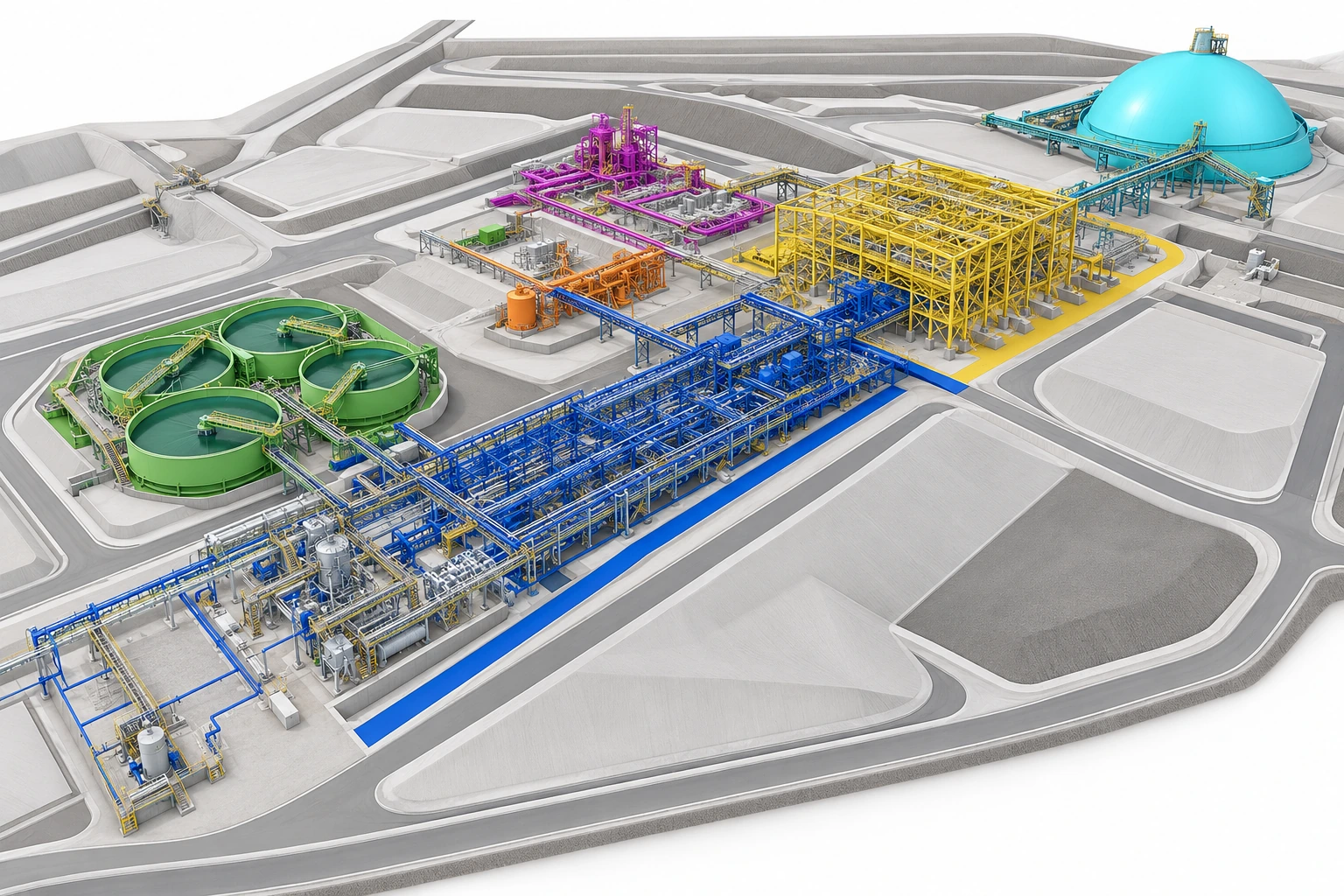
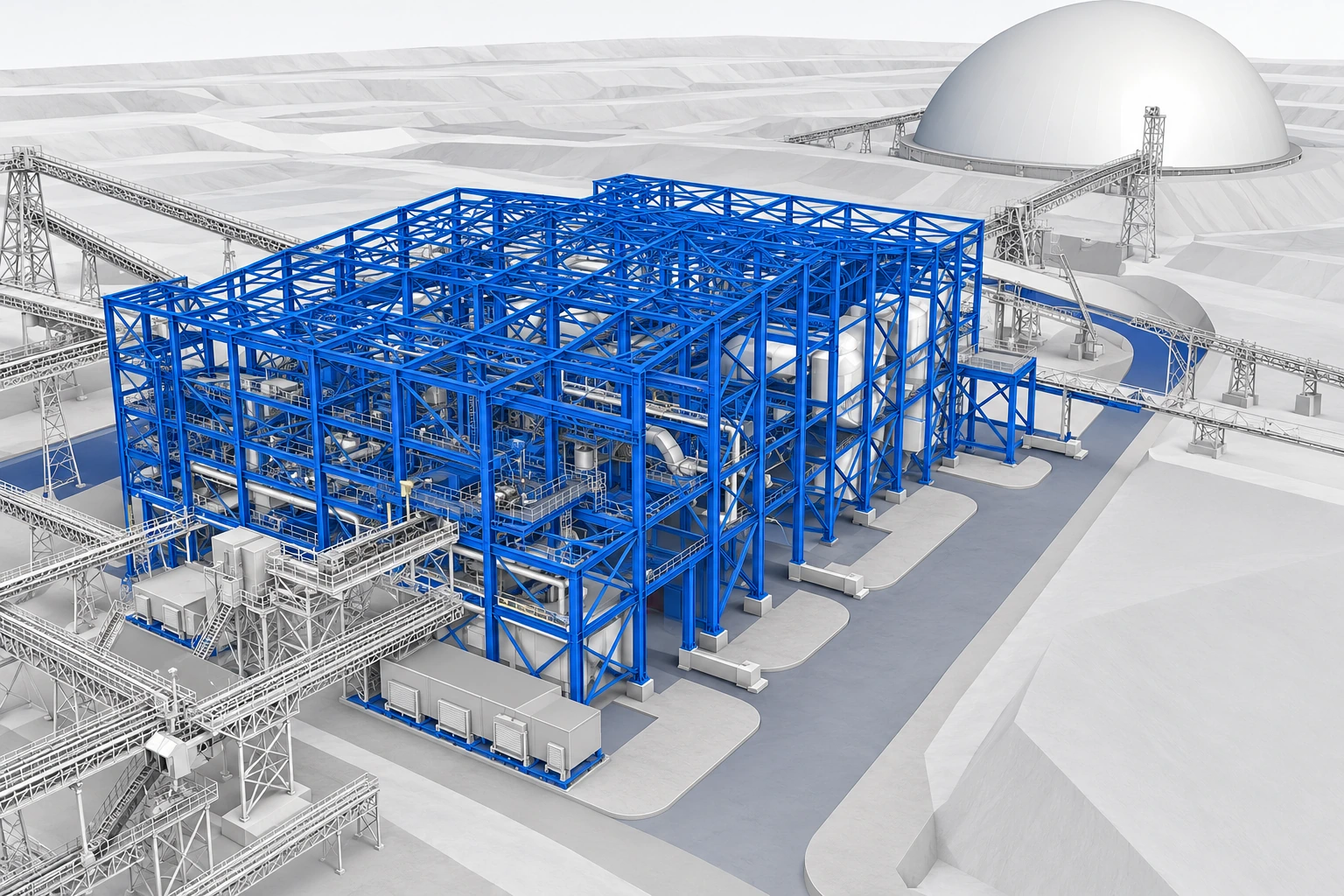
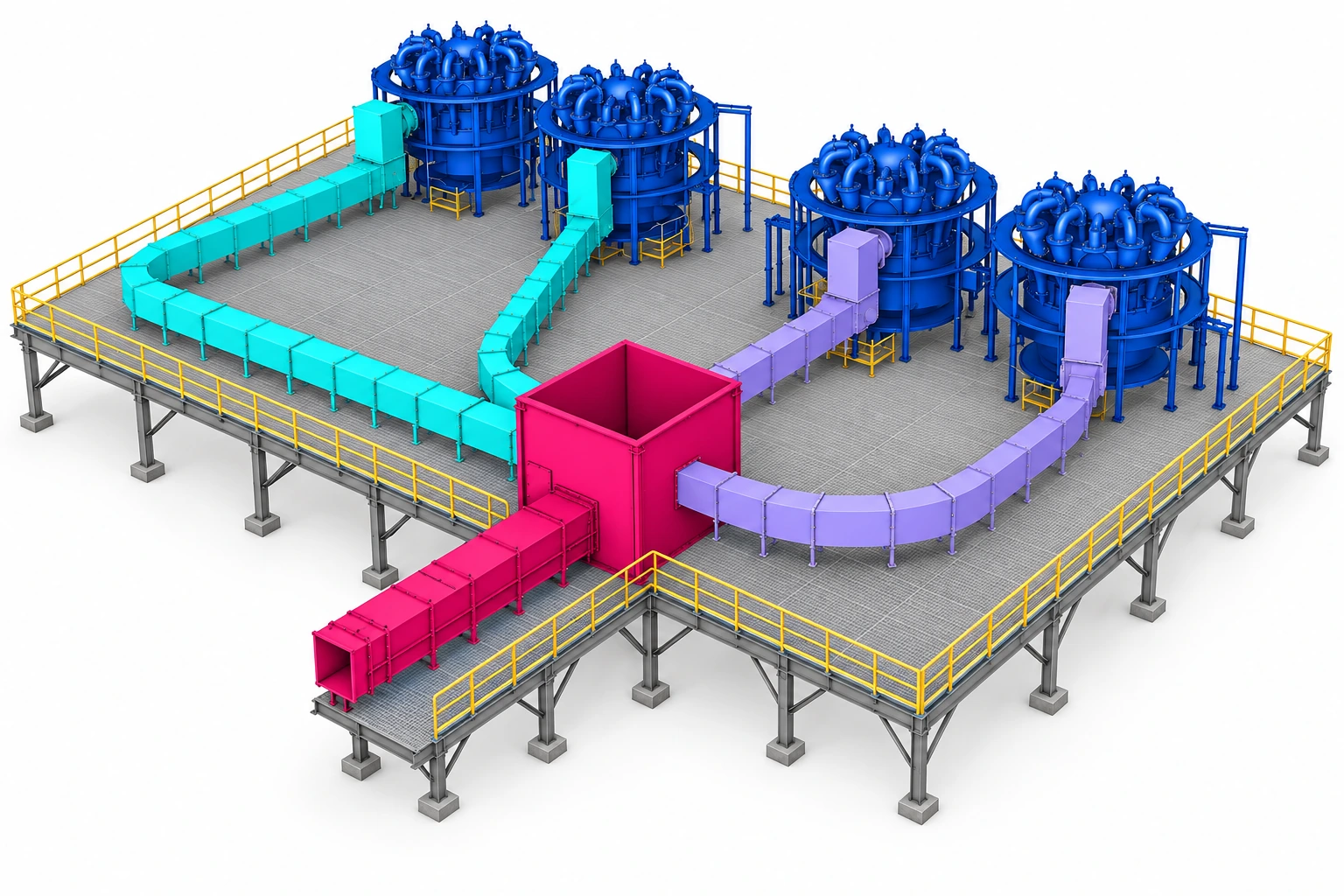
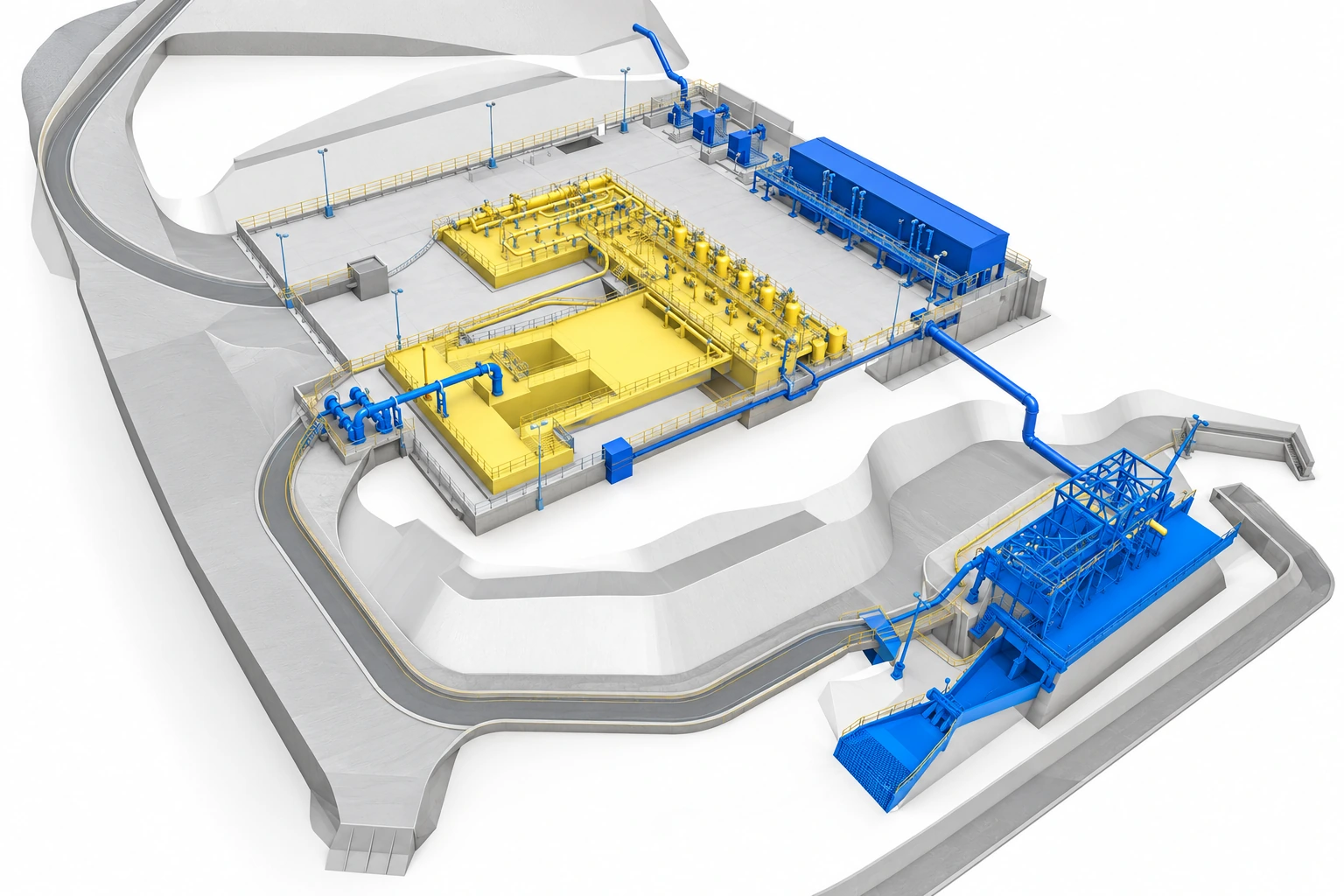
Industrial BIM: from the whole plant to the detail
Explore how a model connects plant areas, structures and the systems that need to be ready for operation.
Conceptual visualisation
Selected view / 01
Plant and construction areas
An integrated view supports site layout, workfront planning and coordination between facilities.
Process engineering connects mineralogy, testwork and product requirements with a plant configuration. Circuits are evaluated alongside conveying capacities and the utilities that support them.
Crushing, grinding and classification
Particle size reduction and classification must reflect mineral liberation and downstream processing requirements. The assessment connects feed variability, equipment capacities and circuit behaviour.
Ore preparation and solids balance
Interactions between stages and recirculating streams
Energy and maintenance requirements
Concentration and recovery
The selection of flotation, gravity separation, magnetic separation or other alternatives depends on the ore response. Studies compare recovery, product quality and operating constraints using representative testwork.
Metallurgical criteria and process route selection
Integration of process equipment and utilities
Concentrate and intermediate product handling
Hydrometallurgy and process integration
Leaching and recovery routes from solution are assessed according to mineralogy, impurities and product specifications. Their integration considers balances, materials of construction and handling conditions within the plant.
Testwork-based assessment of alternatives
Interaction between solutions and recovery stages
Utilities, instrumentation and process control
Solid–liquid separation
Thickening and filtration connect the process with water recovery and product or tailings handling. Design requires consideration of material characteristics and the response observed in testwork.
Slurry balances and water recovery
Pumping and pipeline requirements
Storage and disposal interfaces
Minerals and development routes
The ore and its variability define the study questions. The treatment route is supported by characterisation, testwork and product requirements, with a scope tailored to each deposit.
Copper+
Sulphide and oxide ores require different treatment routes. Studies connect feed characteristics with flotation concentration or hydrometallurgical alternatives where appropriate. The assessment integrates concentrate handling, process solutions, water recovery and plant infrastructure.
Mineralogical variability and metallurgical testwork
Crushing, grinding and concentration
Assessment of leaching, solvent extraction and electrowinning according to the selected route
Gold and silver+
Recovery depends on how the metals occur within the ore and their association with other constituents. Conceptual work connects test results with preparation, concentration and recovery stages, considering materials handling, water and process waste.
Characterisation and comparison of treatment routes
Integration of concentration and recovery stages
Balances, product quality and utilities
Zinc, lead and other base metals+
Polymetallic ores require assessment of component separation and concentrate specifications. Process selectivity and feed variability guide testwork and circuit design, alongside thickening, filtration and dispatch requirements.
Metallurgical response and concentrate quality
Coordination of circuits and plant utilities
Product handling and logistics infrastructure
Iron ore and industrial minerals+
Beneficiation and product preparation are linked to end-use requirements. Crushing, classification and separation must be coordinated with stockpiling, transportation and dispatch. The assessment incorporates feed variations, material characteristics and infrastructure constraints.
Comparison of beneficiation options
Bulk materials handling, belt conveyors and stockpiles
Integration with transportation and delivery points
Lithium, nickel and battery materials+
The feedstock and target quality determine concentration, separation and refining stages. Development requires a review of impurities, testwork response and utility availability before defining the configuration. Alternatives are compared on a consistent technical basis.
Characterisation and process route validation
Purity requirements and impurity control
Integration of water, energy and intermediate products
Phosphates, potash and other minerals+
Minerals intended for industrial applications or as fertiliser feedstocks have specific quality and handling requirements. Testwork informs beneficiation and conditioning options, while engineering connects process, storage and logistics with site conditions.
Assessment of ore preparation and separation
Product conditioning and handling
Utilities and infrastructure for storage and dispatch
Engineering in practice
Coordinate the process plant with its infrastructure
A mining plant design connects process equipment, materials handling, structures, water and power supply. Coordinated models support reviews of transfer points, access and maintenance space, while process design bases maintain consistency between capacities, balances and utility requirements.
Mining scenarios and the production sequence define feed variations and transportation requirements. The review integrates geological information, geotechnical conditions and materials handling options with plant capacity. These interfaces identify stockpiling, blending and infrastructure requirements.
Water and resource recovery+
The water balance connects available sources with process demand and recoverable return flows. Water quality determines treatment and reuse requirements. Engineering coordinates abstraction, storage, conveyance, pumping and distribution with operating variations and monitoring needs.
Tailings and associated systems+
Material properties and the water balance guide the assessment of tailings thickening, filtration and transportation. Interfaces with the tailings storage facility require coordination with specific geotechnical, hydraulic and environmental studies, including monitoring, operations and closure planning.
Energy, transportation and logistics+
Electrical infrastructure and bulk materials handling systems must support the operating plan. Demand, reliability and access conditions are reviewed alongside belt conveyors, transfer stations, stockpiles and dispatch. Location also influences procurement, equipment transportation and the construction sequence.
Expansions at existing plants+
An expansion requires review of upstream and downstream capacities and constraints. Information gathering and performance testing help define the scope. Planning integrates tie-ins, supplies and intervention windows to coordinate the project with operational continuity.
Questions about mining projects
What is needed to compare process alternatives?+
Representative ore information, characterisation and test results, product requirements and site conditions are needed. The comparison must use consistent assumptions and record uncertainties. Where data are missing, the study can define an information gathering or testwork programme before selecting the route.
How are the mine, plant and infrastructure coordinated?+
The feed plan is linked to process capacities, stockpiles, transportation and water and energy availability. Reviewing these connections identifies constraints that cannot be resolved by modifying a single piece of equipment in isolation. Disciplines work with common scenarios and scope boundaries.
What does EPCM cover?+
It covers engineering coordination, procurement management and construction management in accordance with the contract. This includes interfaces, deliverable and supply tracking, change control and handover readiness. The responsibilities of the owner, contractors and suppliers must be defined during planning.
How is an improvement approached in an operating plant?+
It starts with a verifiable problem: a capacity constraint, recovery loss, resource consumption or recurring failure. Data and asset condition are checked, alternatives compared and the intervention prepared. Subsequent monitoring enables the outcome to be evaluated against the agreed baseline.